Water infrastructure is civil works and electrical works at the same time, and neither is allowed to run ahead of the other. The concrete decides where the equipment can go; the equipment decides what the concrete has to leave ready. When that conversation happens late, something gets demolished.
What we did
Civil works and electrical installations for water infrastructure: concrete foundations and structures, pipelines, and the power supply and commissioning of the pumping equipment.
How it was executed
Foundations. Tying the reinforcing steel of the circular foundations is the part that demands the most discipline: the geometry is unforgiving, and the steel has to be placed and tied before the concrete arrives. The photos show the crew working inside the rebar cage, which is where most of this stage is spent.
Pipelines. Large-diameter pipe is set by crane over the open trench. The lift is short; the preparation is not. The bed has to be level and the trench has to hold what is about to sit on it.
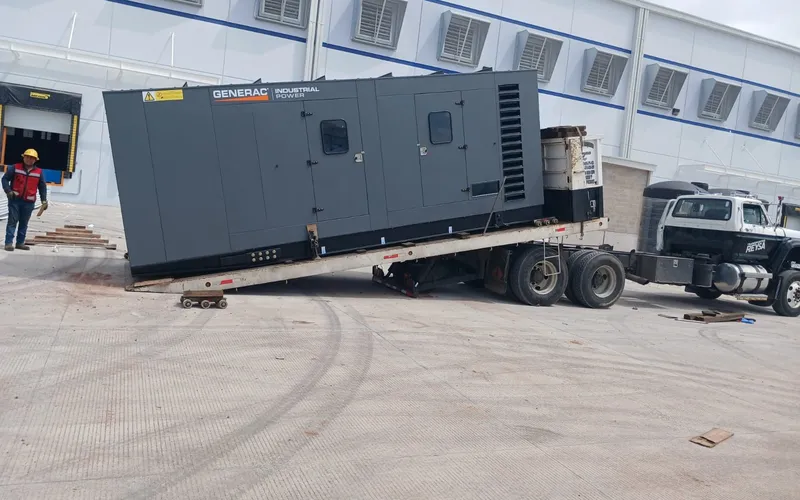
Electromechanical. Once the civil works are finished, the pumping equipment is installed and connected. The challenge here is high-power motors: starting, protection, and a grounding grid that actually works. A pump motor does not warn you when it is badly fed; it simply runs hot and dies early.
The result
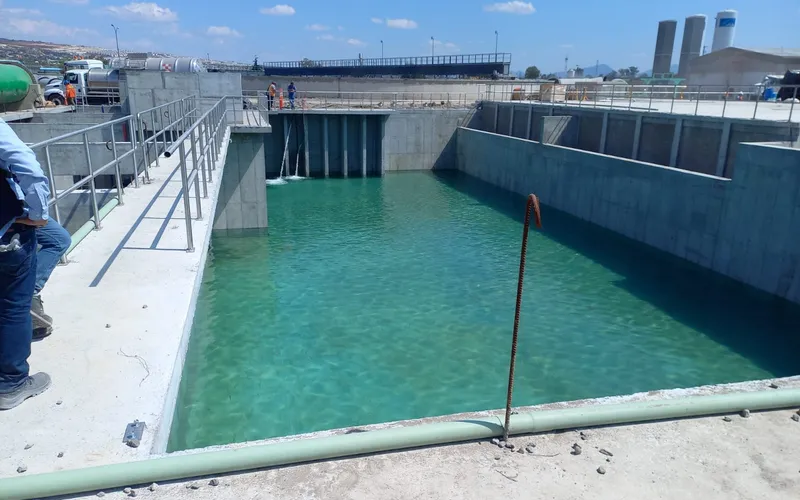
The basin full of water, the gates operating, and the pumps turning. The clips in the on-site video section come from this commissioning: proof that the whole assembly —concrete, pipe, motor and power supply— ended up working as a single system.