A lift takes minutes and is prepared over days. What you see —the crane raising the load— is the trivial part. What decides whether it goes well is the real weight of the load, the working radius, the condition of the ground under the outriggers, and the plan for what to do if something does not fit where it is supposed to.
What we did
Steel structure assembly and specialized rigging: unloading, moving and setting heavy equipment on site —transformers, electrical cabinets and precast concrete pieces.
How it was executed
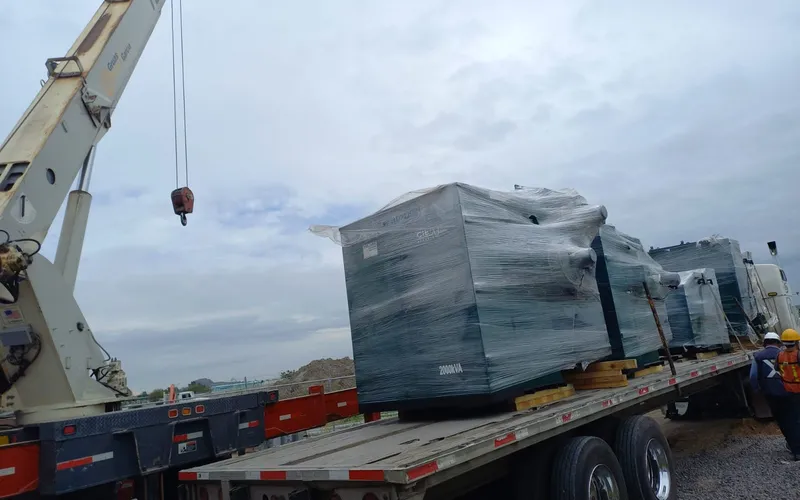
Unloading. The equipment arrives on a flatbed, and sometimes the maneuver starts out on the road, before entering the site. The crane is positioned, stabilized, and the ground is checked: an outrigger sitting on poorly compacted fill is the most common cause of a lift that ends badly.
Lifting and setting. Slings are anchored to the equipment’s lifting points, not wherever is convenient. The piece is raised, turned and lowered, guided by crew on the ground in direct contact with the operator. The photos show the load suspended and the crew walking it into position.
Assembly. Once the piece is set, the steel structure that supports it —or ties it into the rest of the plant— is fabricated, assembled and welded.
The result
The gallery walks through several lifts: the crated equipment on the flatbed, the crane deployed, the piece in the air, and the crew receiving it in its final position. Each one is the same discipline repeated —plan, stabilize, anchor, lift— and none of them tolerates improvisation.